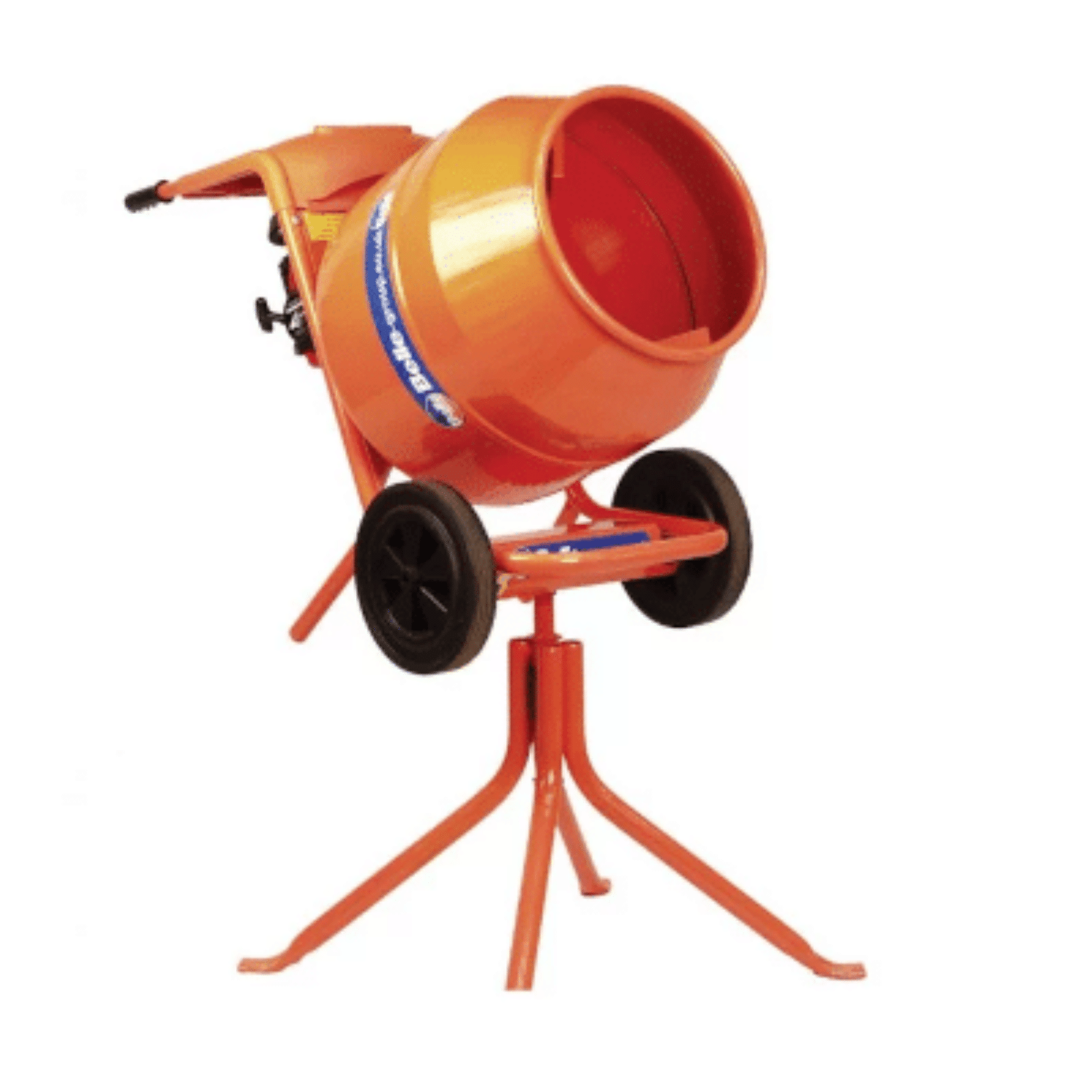
A cement mixer is arguably one of the most critical pieces of equipment on any construction site, from landscaping projects to small house builds. While power and capacity are vital, the modern builder must prioritise two key factors: safety and ergonomics.
At Quantum Plant, we know that a heavy-duty, professional tip-up cement mixer is designed to save time, but its primary function should be saving your back. Here is our guide to designing safer, more ergonomic workflows around your compact, professional tip-up mixer.
The Ergonomic Advantage of the Tip-Up Design
Traditional wheeled mixers require significant manual force to tip the drum and empty a heavy load into a wheelbarrow. The tip-up design, common in professional-grade mixers, eliminates much of this manual strain:
- Reduced Manual Strain: The mechanism provides mechanical leverage, allowing the operator to discharge even a fully loaded drum with far less effort. This minimises the repetitive stress and strain on the back, shoulders, and arms—a major factor in long-term builder health.
- Controlled Pouring: The finely balanced drum and robust tilting wheel or lever allow for precise control over the pouring speed and angle. This means you can accurately deposit the mix directly into a wheelbarrow, minimizing spills, reducing clean-up, and eliminating the need to manually scoop up expensive wasted material.
- Optimal Height: Professional tip-up mixers are often designed with an optimal discharge height, requiring less bending and lifting when positioning the receiving vessel (e.g., wheelbarrow).
Essential Safety Protocols for Tip-Up Mixers
Even with ergonomic advantages, cement mixers require strict adherence to safety protocols to prevent accidents and ensure the longevity of the machine.
1. Optimal Placement and Stability
The mixer’s placement is the first line of defence against instability:
- Level Ground Only: Always position the mixer on solid, level ground. The powerful vibration during mixing can cause the machine to “walk” or become unstable if placed on slopes or soft soil.
- Clear Work Zone: Ensure the discharge zone is clear of obstructions. The area around the mixer must be tidy, allowing the operator and any support crew clear, stable access for loading and unloading materials.
- Lock and Secure: Always ensure the drum is locked into position when mixing and when not in use. This prevents accidental tipping that could cause injury or material loss.
2. Electrical Safety (For Electric Models)
If using an electric mixer, prioritizing electrical safety protects both the machine and the operator:
- RCD Protection: Always connect the mixer via a Residual Current Device (RCD) on the power source to instantly shut off the power if a fault occurs.
- Cable Management: Ensure power cables are routed safely, avoiding trip hazards and protecting them from damage caused by passing vehicles or sharp tools. Never use extension leads that are not rated for heavy-duty site equipment.
3. Personal Protective Equipment (PPE)
Handling cement, mortar, and concrete requires mandatory PPE:
- Eye Protection: Essential to protect against flying dust and splashing wet mix.
- Gloves: Wet cement is corrosive and can cause severe chemical burns. Waterproof, heavy-duty gloves are non-negotiable.
- Respiratory Protection: When dealing with dry powdered materials (cement, lime), wear a suitable dust mask to prevent inhalation.
A high-quality, professional tip-up cement mixer from Quantum Plant is built to withstand the rigours of the job. By integrating these ergonomic and safety-focused workflows, you not only protect your workers but also boost overall site efficiency and ensure your valuable equipment remains operational for years to come.
Ready to upgrade your site efficiency with equipment built for safety and durability? Contact Quantum Plant today to explore our range of heavy-duty, compact cement mixers.